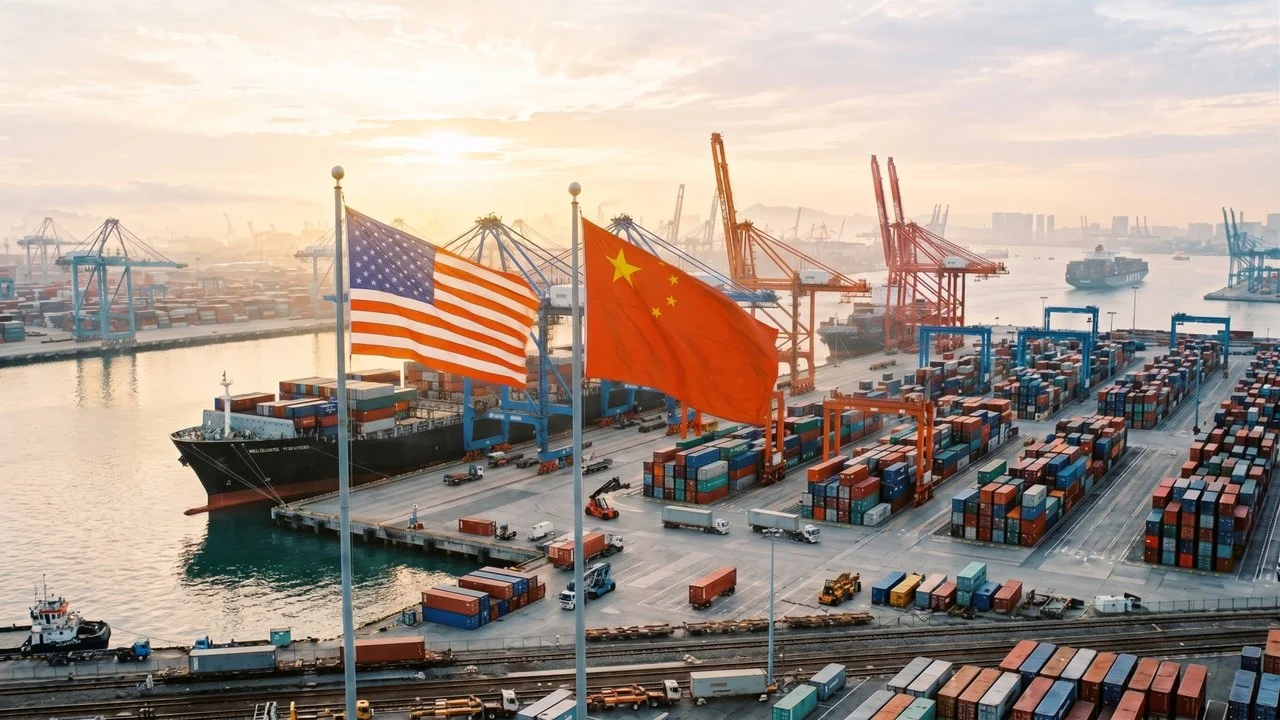
The Trump administration has proposed a sweeping new round of Section 301 tariffs targeting 14 major trading partners – including China, the 27-nation European Union, Japan, South Korea, Taiwan, and India – over alleged state-backed industrial overcapacity.
Unveiled on Wednesday, November 25, 2026, by United States Trade Representative (USTR) Jamieson Greer following an eight-month investigation, the measures seek to rebuild Washington’s tariff wall after the US Supreme Court invalidated earlier emergency-powers duties in February 2026 and ordered roughly $166 billion in refunds.
Anchored in Section 301 of the Trade Act of 1974, the proposal outlines headline levies between 10 per cent and 40 per cent, though actual applied rates for most partners will respect previously negotiated bilateral ceilings and will not stack atop standard Most-Favoured-Nation (MFN) rates. China stands as the primary exception, facing an additional 20 per cent duty stacked on roughly 25 per cent in 2018 levies, with a threatened jump to 40 per cent if a bilateral trade truce expiring on January 10, 2027, collapses.

Other proposed working rates include 20 per cent for Vietnam – rising to 35 per cent if talks stall – 18 per cent for Thailand, 17 per cent for India contingent on a bilateral deal, 15 per cent for the European Union, Japan, South Korea, and Switzerland with headroom to 20 per cent, and 10 per cent for Singapore, alongside Bangladesh, Cambodia, Indonesia, Malaysia, and Taiwan. A separate Section 301 action targets Brazil with a 10 per cent duty on finished Embraer aircraft and higher above-quota sugar tariffs, while Mexico and Norway were spared pending further review.
To cushion domestic supply chains and consumers, the USTR granted broad exemptions for crude oil, refined fuels, gas, pharmaceuticals, select semiconductors, and non-domestic agricultural goods, while keeping existing automobile, steel, and aluminium levies separate. The proposals face a mandatory public comment period and hearings scheduled for January 25, 2027, making January 2027 the earliest possible start date.
Chinese Foreign Ministry spokesperson Guo Jiakun dismissed Washington’s overcapacity claim as a false proposition, though Beijing refrained from immediate retaliation ahead of President Donald Trump’s planned meeting with President Xi Jinping at next month’s G20 summit in Miami. Domestically, the move arrives weeks after Republican losses in the November midterm elections and amid polling showing 62 per cent of Americans favour repealing broad tariffs due to consumer inflation.