One year after a United States-brokered truce took effect, the Gaza Strip remains gripped by recurring air strikes, an imminent winter exposure crisis, and an acute collapse in humanitarian relief funding.
The worsening conditions coincide with a damning report published by an independent United Nations human rights commission, which found that Israel has continued to carry out acts of genocide and systematic extermination across Gaza and the occupied West Bank despite the nominal ceasefire. The Israeli Mission to the UN swiftly rejected the findings, dismissing the inquiry as a politicised misinformation campaign. Casualty records indicate that more than 74,500 Palestinians have been killed since the conflict erupted in October 2023, with over 1,500 fatalities registered during the ceasefire period alone.
The political impasse in Tel Aviv has further compounded the crisis. Israel’s first general election since the start of hostilities has concluded in a deadlock, with exit polls showing Prime Minister Benjamin Netanyahu virtually tied with the opposition bloc led by former military chief of staff Gadi Eisenkot. The electoral gridlock has halted reconstruction initiatives under the internationally proposed peace framework, as Israeli authorities continue to withhold approval for an International Stabilisation Force base intended to assume security responsibilities from Hamas.
Humanitarian agencies face catastrophic operational shortfalls. The World Food Programme (WFP) announced it has been forced to slash food distribution by a third – reducing its beneficiary roll from 1.6 million to 1.1 million Gazans – amid deep international funding cuts. Logistical bottlenecks intensified following Israel’s complete closure of the primary Kerem Shalom commercial crossing.
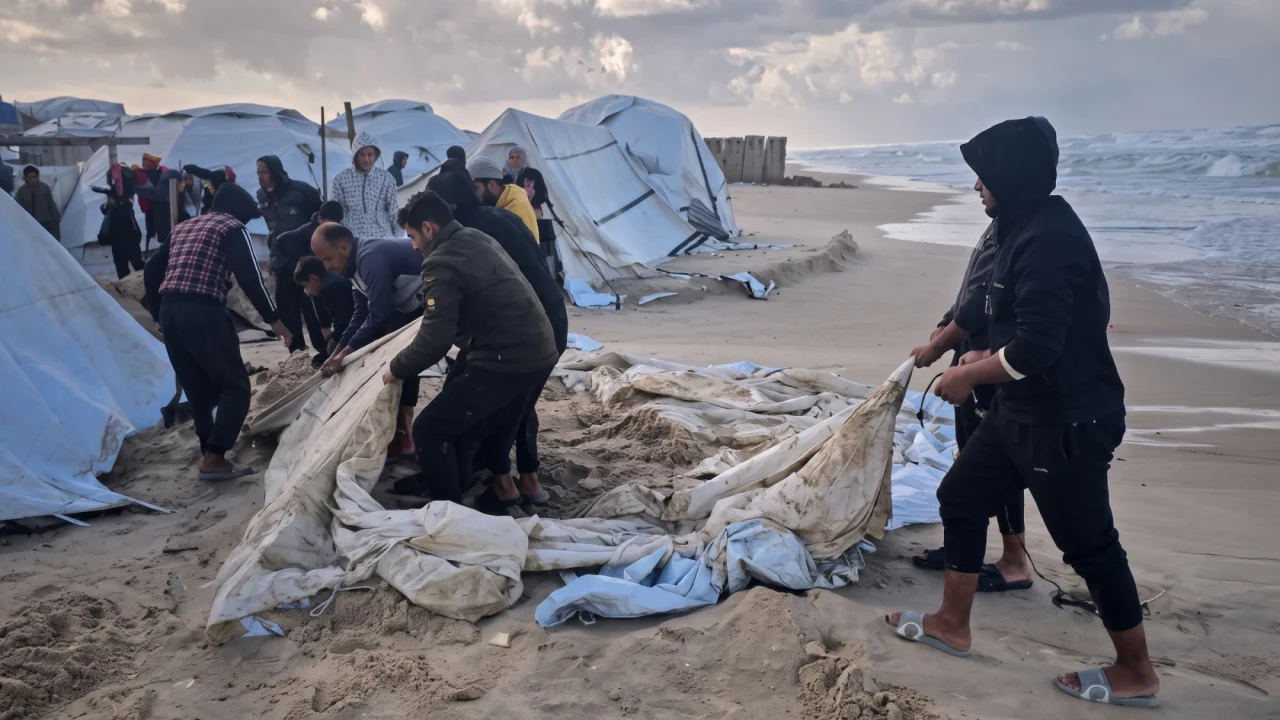
According to the UN Office for the Coordination of Humanitarian Affairs (OCHA), approximately 950,000 displaced Palestinians sheltering in makeshift tents face medium-to-high risks from impending winter storms and coastal flooding, with existing relief stockpiles sufficient to reinforce only 18 per cent of vulnerable shelters. Compounding the emergency, a joint UN-World Bank assessment revealed that Gaza’s medical infrastructure has been set back 77 years, leaving 50 per cent of essential medicines and 64 per cent of critical oncology drugs exhausted amid persistent import bans and daily strikes.