The Federal Government has disbursed ₦249.6 billion under the Basic Health Care Provision Fund (BHCPF) over a three-year period, representing 77.1 per cent of all allocations released since the intervention’s establishment in 2019.
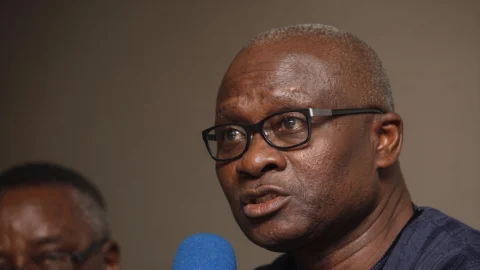
The ministerial scorecard was unveiled in Abuja by the Minister of State for Health and Social Welfare, Dr Iziaq Adekunle Salako, who highlighted that cumulative statutory funding released by the federal government since inception stands at ₦422.3 billion out of ₦323.6 billion total historical disbursements. The fund is channelled through four statutory gateways: the National Health Insurance Authority (NHIA), which takes 48.75 per cent for vulnerable population coverage; the National Primary Health Care Development Agency (NPHCDA) at 45 per cent for facility maintenance and essential drugs; the Emergency Medical Treatment (EMT at 5 per cent; and the Nigeria Centre for Disease Control (NCDC) receiving 1.25 per cent for epidemic surveillance.
Under the Direct Facility Financing (DFF) framework, 8,309 primary healthcare centres (PHCs) across all 774 local government areas now receive direct operational funding, bypassing sub-national administrative delays. Salako noted that the ministry is scaling this footprint to reach 17,600 fully functional PHCs by the next fiscal cycle. Improved drug supply and rehabilitated infrastructure drove annual patient visits at beneficiary centres from 22.1 million to 45.5 million.
The capital injection expanded national health insurance enrollment to 23.06 million individuals, up from 16.2 million previously. Within this figure, 3.18 million indigent citizens, pregnant women, under-five children, and elderly persons now access free basic healthcare, alongside 90,000 inmates across correctional custodial centres nationwide.
The fund also covered critical maternal and trauma procedures, financing 25,320 free emergency cesarean sections for indigent mothers and completely subsidising the surgical repair of 4,380 women suffering from vesicovaginal fistula (VVF). Additionally, the EMT gateway integrated 1,250 ambulances into a synchronised national emergency grid to guarantee emergency stabilisation within the first 48 hours of trauma.