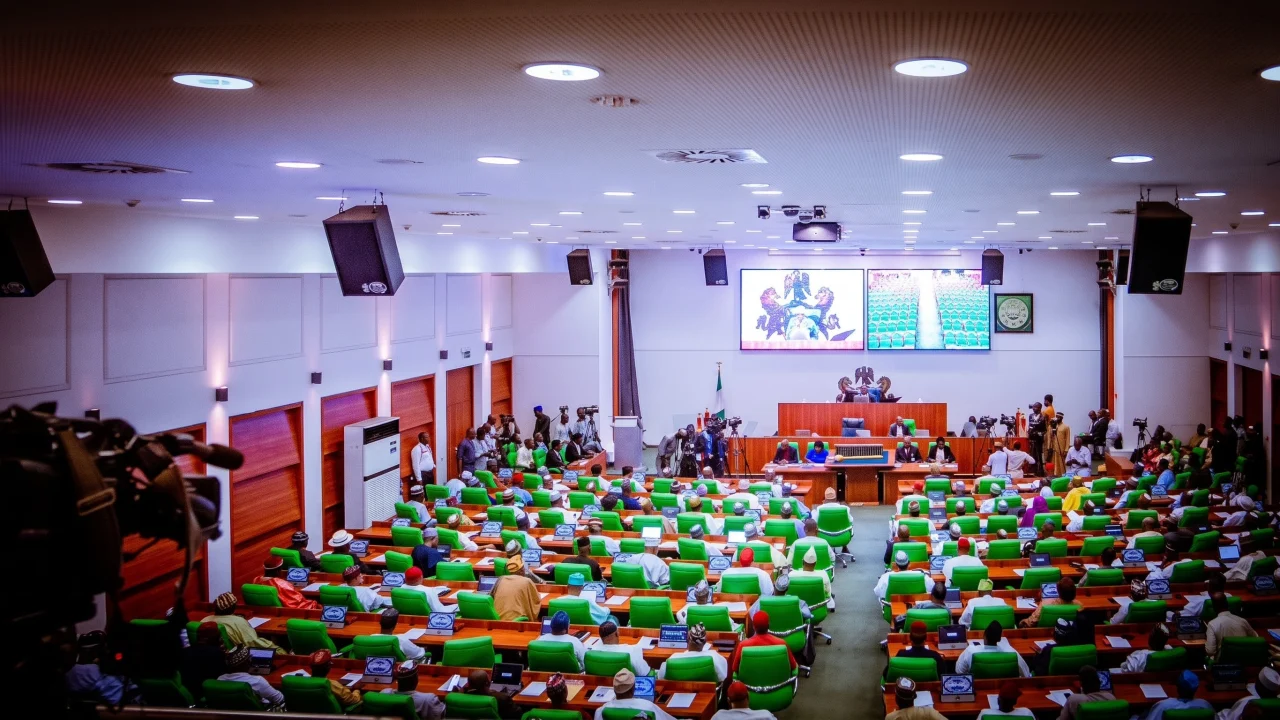
Nigeria has reached a milestone in its push toward decentralized law enforcement after 24 State Houses of Assembly voted to approve the Constitution (Sixth Alteration) Bill, 2026, crossing the mandatory constitutional threshold required to establish state police across the federation.
The Presidential Working Group on the National Policing Bill announced the development on Friday, 23 October 2026, confirming that the measure has met the two-thirds majority requirement across Nigeria’s 36 states as stipulated under Section 9(2) of the 1999 Constitution.
The amendment fundamentally restructures Section 214 of the Constitution, dismantling the single, centralized command structure of the Nigeria Police Force to create a concurrent, dual-tier policing model. Under the new legal framework, policing responsibilities will be split into a Federal Police Service dedicated to national security, counter-terrorism, and cross-border crimes, alongside independent State Police Services managed by sub-national governments to handle community safety and local law enforcement.

The bill’s progression follows nationwide legislative coordination since its transmission to state parliaments on 16 September 2026 by the Clerk to the National Assembly, Kamoru Ogunlana. While initial adoptions in early October were confined to five states – Edo, Osun, Oyo, Rivers, and Zamfara – subsequent endorsements from Ogun, Delta, Plateau, Kwara, and Adamawa brought the tally to 10 by mid-month. A final push on Friday saw 14 additional states ratify the bill, officially taking the total to 24.
Geographically, the approving states cut across every geopolitical zone, including Adamawa, Akwa Ibom, Anambra, Bayelsa, Benue, Cross River, Delta, Edo, Ekiti, Enugu, Gombe, Imo, Kaduna, Kebbi, Kwara, Nasarawa, Ogun, Osun, Oyo, Plateau, Rivers, Taraba, Yobe, and Zamfara. Meanwhile, states such as Kano, Bauchi, and Katsina have the measure in committee or pending plenary debates, with six other states yet to vote and three recording no formal legislative action.
To address long-standing public concerns regarding the potential misuse of localized forces by state governors for political witch-hunts, the bill incorporates statutory safeguards. These include the establishment of independent State Police Service Commissions to insulate recruitment and disciplinary actions from executive overreach, adherence to mandatory national operational baselines set by the National Assembly, and emergency federal takeover provisions in cases of grave operational collapse or severe rights abuses.
Furthermore, the Federal Police Service will remain the default operational authority in any state until that jurisdiction receives formal certification of operational and fiscal readiness.
Addressing the next phase of implementation, Chairman of the Presidential Working Group and Chief of Staff to the President, Femi Gbajabiamila, noted that the endorsed amendment will return to the National Assembly for onward transmission to President Bola Tinubu for assent.
Simultaneously, the Federal Ministry of Justice is completing the review of the accompanying National Policing Bill, 2026 – comprising 62 consequential legislative amendments – which will be formally presented to the President within two weeks to activate the dual-tier policing structure.