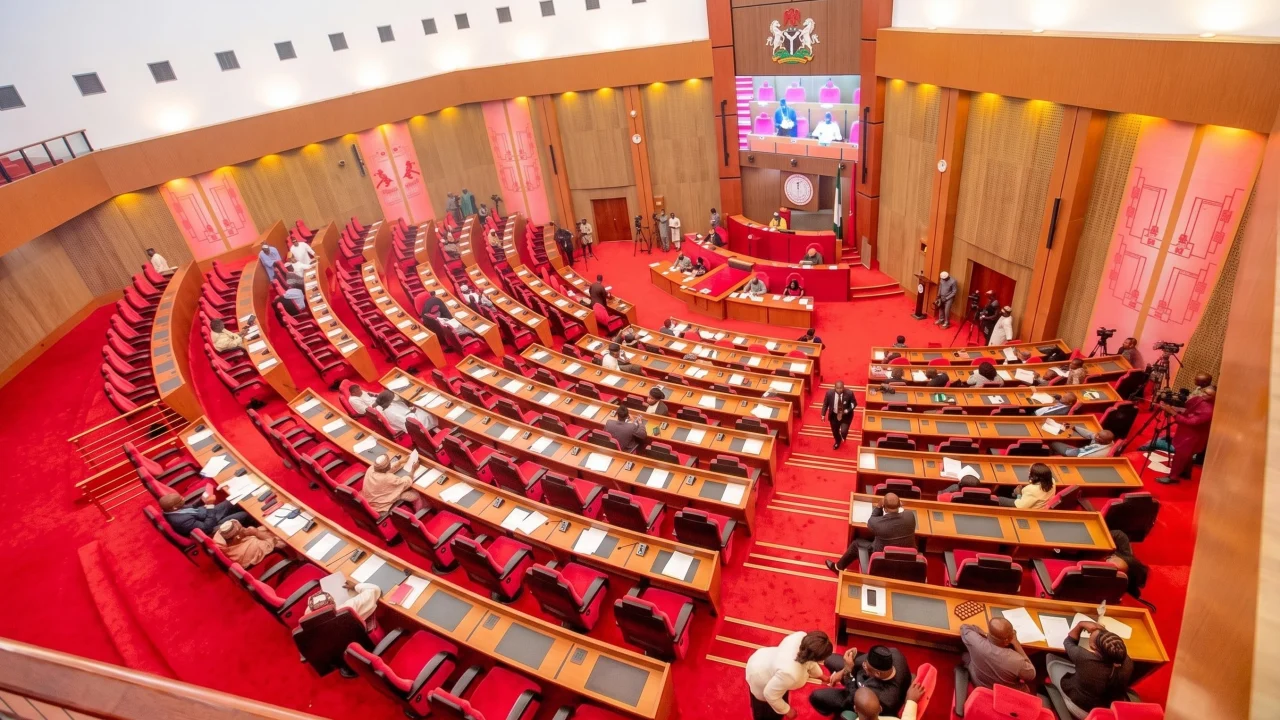
The Nigerian Senate on Thursday advanced an executive-sponsored bill titled the National Universities Commission Act (Repeal and Re-enactment) Bill, 2026 (SB. 1056) through its second reading, paving the way for a comprehensive overhaul of the legal architecture governing Nigeria’s university system.
The legislative proposal, sponsored by Senate Leader Senator Opeyemi Bamidele and presented on the floor by Senate Chief Whip Tahir Monguno, seeks to dismantle decades-old regulatory statutes and replace them with modern enforcement frameworks suited to current higher education realities.Leading the debate, lawmakers argued that the extant NUC Act has grown obsolete, having been enacted when the higher education sector did not account for the rapid proliferation of private universities, cross-border digital learning, or emerging academic technologies.
Senators voiced alarm over instances where higher institutions are operated like private corporate entities without proper oversight. Plenary discussions singled out Tansian University in Umunya, Anambra State, citing severe administrative disruptions where university proprietors reportedly treated the institution like a private limited liability company, arbitrarily hiring and sacking Vice Chancellors at will. Lawmakers stressed that such governance lapses highlight the regulatory body’s lack of immediate, enforceable legal sanctions.

Under the proposed 2026 reform bill, the NUC will transition from a largely supervisory agency to an empowered regulatory authority equipped with stringent punitive powers. Key pillars of the legislation include aggressive statutory sanctions for structural, financial, or academic infractions, alongside explicit authority to investigate university administration, audit governance practices, and dissolve errant governing councils that destabilise academic calendars.
The bill also solidifies the commission’s statutory authority as the supreme body for university academic accreditation, updating curriculum baselines to align with international standards while safeguarding institutional autonomy from arbitrary proprietor interference.
Following a majority voice vote presided over by Senate President Godswill Akpabio, the bill scaled second reading and was referred to the Senate Committee on Tertiary Institutions and TETFund.
The committee is mandated to conduct nationwide stakeholder public hearings – engaging bodies such as the Academic Staff Union of Universities (ASUU) and private university owners – and submit its report within four weeks.