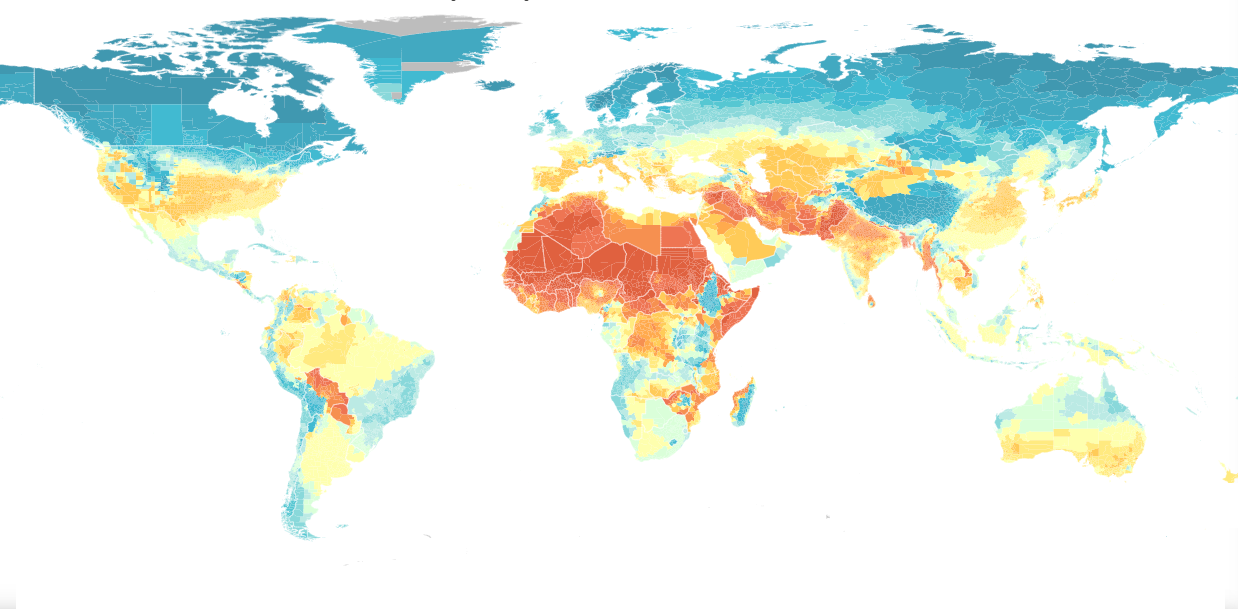
Nigeria is confronting a severe public health and climate emergency as an intensifying “Super El Niño” weather system is projected to trigger 31,400 additional heat-related fatalities nationwide between September 2026 and February 2027.
Data released by the Climate Impact Lab – a research collaborative comprising climate scientists and economists from the University of California, Berkeley, and the University of Chicago – reveals that Nigeria will experience the highest projected toll of excess heat fatalities of any country globally during the current cycle.
The World Meteorological Organisation and United Nations humanitarian agencies have described the escalating phenomenon as a “meteorological wrecking ball” that threatens critical infrastructure, agricultural productivity, and human life across the Global South.
The current atmospheric event has escalated into a “Super El Niño” due to tropical Pacific sea surface temperatures surging between 2.0°C and 3.8°C above long-term baselines. This disruption acts as a global thermal multiplier, driving an estimated 451,000 excess heat deaths worldwide. The African Sahel is forecast to bear 66,800 of those fatalities, with Nigeria alone accounting for nearly half of the entire regional toll.
Meteorological logs from the Nigerian Meteorological Agency (NiMet) already indicate anomalous heatwaves well ahead of the traditional peak dry season, with temperatures climbing to 41°C in Nguru, Yobe State, while coastal areas in Lagos have logged unseasonably high baselines of 34°C.
The weather anomaly is dividing the country along two distinct climatic fault lines. In the northern savannah and Sahel belts, extreme and prolonged heatwaves are worsening desertification, drying up crucial water reservoirs, and triggering widespread staple crop failures across millet, sorghum, and maize farmlands.
Conversely, the southern coastal belt is grappling with highly volatile precipitation patterns, where sudden, intense bursts of rainfall cause flash flooding, overwhelm fragile municipal drainage systems, and displace local communities.
The climate shock is compounding domestic socioeconomic pressure, with UN Humanitarian Chief Tom Fletcher warning that the wider African continent faces an economic hit ranging between $10 billion and $20 billion, leaving approximately 50 million people food insecure.
In Nigeria, drying pastures are forcing pastoralists south earlier than usual, raising concerns over resource conflicts, while transit disruptions continue to push up food haulage costs.
Public health specialists emphasise that the projected 31,400 fatalities represent an avoidable forecast rather than an inevitable outcome, noting that roughly 15,400 deaths are expected to cluster between December 2026 and February 2027.
Climate advocacy organisations are pressing federal and state authorities to immediately roll out public cooling centres in vulnerable urban areas, install clean hydration points in open-air markets, enforce outdoor labour pauses during peak afternoon heat between 11:00 AM and 3:00 PM, and stockpile primary healthcare clinics with oral rehydration solutions and intravenous fluids.