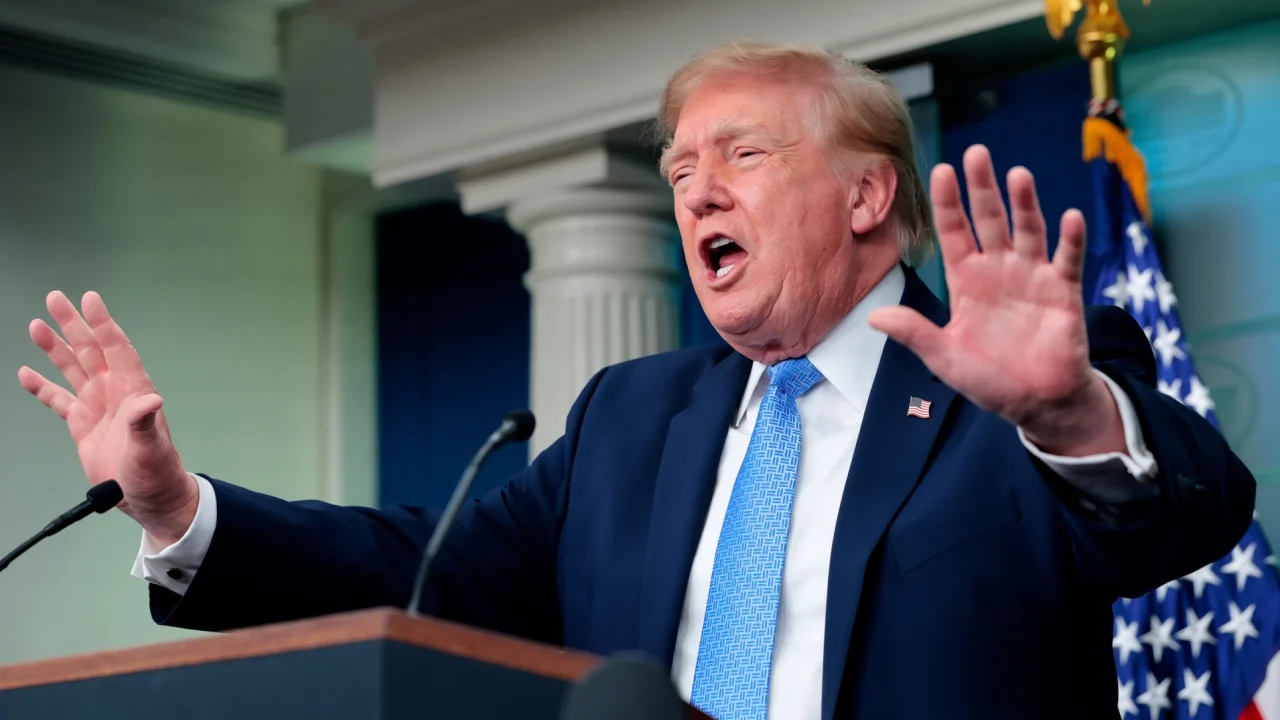
The geopolitical landscape has shifted decisively as President of the United States Donald Trump formally announced an end to large-scale military bombardments against Tehran. During a surprise appearance in the White House briefing room, President Trump asserted that the nine-month-old conflict is militarily over. According to him, the conventional military strength of the adversary has been decisively broken, making further major strikes highly unlikely.
Despite the de-escalation of aerial strikes, the government will maintain a severe naval blockade to enforce economic isolation. Official transcripts from the White House show that the administration is maintaining this posture at the behest of regional allies, including the Kingdom of Saudi Arabia and the State of Israel. These regional partners reportedly fear that a premature withdrawal of American troops could expose them to lingering aggression.
To reinforce this containment strategy, the United States Department of Defense has deployed a third aircraft carrier to the Middle East. Furthermore, official military briefings confirm that thirty-eight infrastructure targets have been pre-selected for potential elimination should Tehran alter its behaviour. While the administration frames the pivot as a tactical triumph, the policy shift follows severe electoral defeats during the recent midterm elections.

Official electoral data from the Federal Election Commission confirms that the Republican Party lost control of both the United States Senate and the United States House of Representatives. Vice President of the United States JD Vance and other senior administration officials have explicitly blamed the war for the severe voter backlash.
The conflict also triggered a massive global surge in fuel prices, driving inflation across the American electorate before global oil markets tumbled sharply following the presidential address.
The pivot toward peace coincides with severe internal legislative turmoil regarding the legal framework of the war. Outgoing United States Representative Thomas Massie officially filed eight articles of impeachment against United States Secretary of Defence Pete Hegseth. According to legislative filings in the United States House of Representatives, the resolution accuses Hegseth of violating the United States Constitution and the War Powers Resolution by introducing armed forces into hostilities on February 28, 2026, without explicit congressional authorisation.
The presidential announcement followed a pivotal diplomatic meeting at the White House with Prime Minister of the State of Qatar Sheikh Mohammed bin Abdulrahman Al Thani, who is actively mediating the conflict. President of the United States Donald Trump claimed there is positive momentum through diplomatic backchannels. However, Islamic Republic of Iran’s Minister of Foreign Affairs Abbas Araghchi and Security Chief Mohsen Rezaei publicly dismissed the claims as fabricated in statements released by the Iranian government.
The Iranian officials countered that peace is impossible unless the federal government lifts the naval blockade and releases frozen sovereign assets. They additionally demanded a complete halt to allied military operations in southern Lebanon as a prerequisite for any formal ceasefire agreement.