The Federal Government has confirmed an imported Ebola case in Abuja, triggering immediate public health emergency protocols and extensive contact tracing across the Federal Capital Territory.
The announcement was made by the Coordinating Minister of Health and Social Welfare, Professor Muhammad Ali Pate, during an emergency press briefing in Abuja on Tuesday.
The confirmed patient, a female air traveller arriving on an international flight originating from Uganda, first developed symptoms on 7 October 2026. She presented at a private medical facility in Abuja on 11 October, where she was admitted before official laboratory confirmation on 20 October led to her transfer to a specialised isolation centre for treatment.

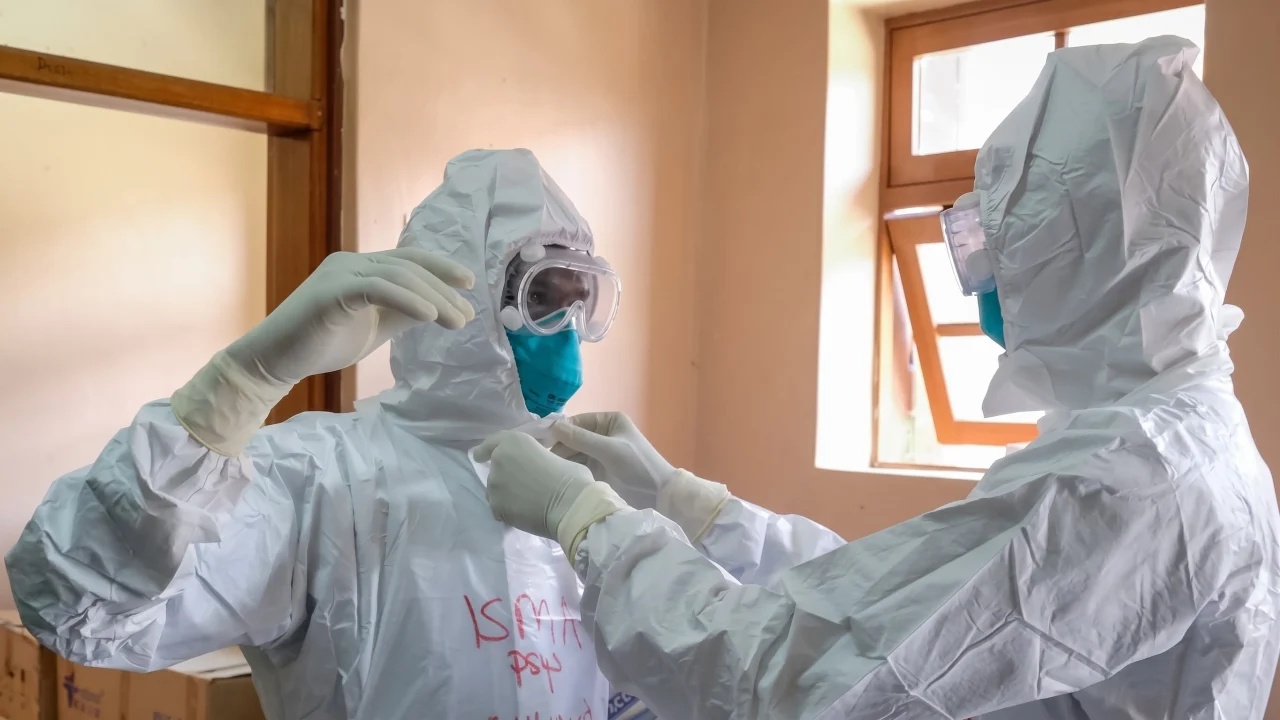
Following the laboratory confirmation, epidemiological response teams tracked a primary ring of 44 contacts considered at risk of exposure. The contact group includes medical personnel at the private clinic, patients and caregivers present during her admission, and passengers identified from her flight manifest.
The Nigeria Centre for Disease Control and Prevention (NCDC) has placed healthcare centres nationwide on heightened alert, scaling up port health surveillance across international airports, transport hubs, and land borders. To finance the containment strategy, the Presidency activated an emergency task force and released ₦10 billion in emergency funding.
The imported case occurs amidst an escalating outbreak of viral haemorrhagic fevers across Central and East Africa. Data from the European Centre for Disease Prevention and Control (ECDC) indicates the outbreak is heavily concentrated in the Democratic Republic of the Congo, which has recorded 9,277 confirmed cases and 4,478 fatalities, with neighbouring Kenya also reporting a cluster of nine confirmed infections.
While health authorities continue to investigate the patient’s transmission route, public health officials have urged residents across the FCT and Nigeria to remain calm, citing established protocols from previous outbreaks.
Citizens have been advised to maintain standard infection-control hygiene, including regular handwashing, avoiding contact with bodily fluids, refraining from handling raw game meat, and reporting symptoms such as sudden fever, vomiting, diarrhoea, and unexplained bleeding directly to the NCDC via the toll-free shortcode 6232.